FIRST ORDER SHIPS FREE - No Minimum Purchase Required.

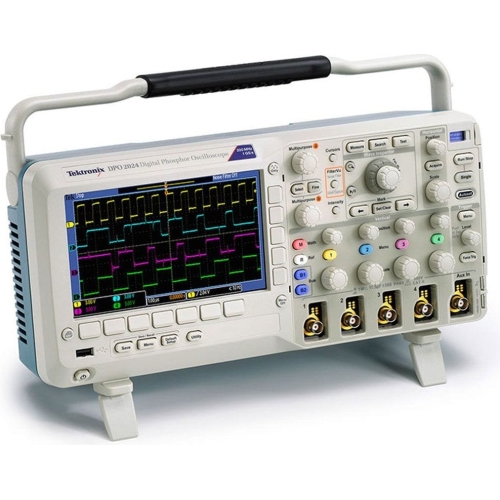
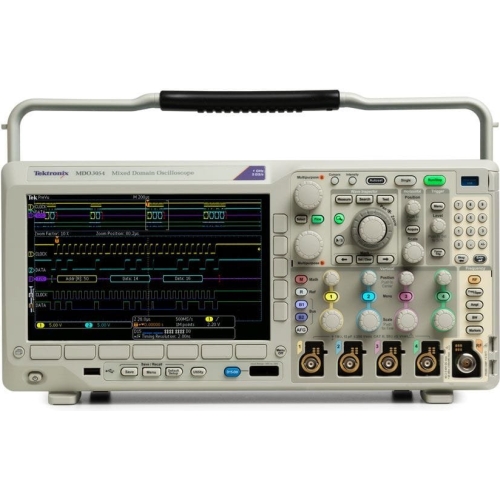
Tektronix Digital Storage Oscilloscopes
As an authorized industrial supplier, we deliver the complete portfolio of Tektronix electronic test instruments and signal generation solutions engineered for demanding North American aerospace, laboratory, and telecom infrastructure. Designed to bridge the gap between advanced microelectronics prototyping and strict NIST-traceable compliance standards, our inventory focuses on high-tier diagnostic hardware. Every mixed domain oscilloscope, waveform generator, and spectrum analyzer is vetted to deliver immediate deployment readiness for enterprise-level embedded system validation and circuit engineering loops.
In high-frequency electronic processing and high-speed data acquisition loops, executing highly accurate waveform analysis is non-negotiable for system troubleshooting and signal integrity validation. The technical core of our catalog highlights the advanced Tektronix 2 Series MSO mixed signal oscilloscope, globally recognized for its ultra-compact form factor, capacitive touchscreen interface, and built-in battery-powered operational flexibility. Built to withstand harsh laboratory and field conditions, these elite test arrays ensure that design engineers stream tamper-proof signal diagnostics directly to corporate asset databases.
Q: What is the bandwidth of Tektronix 2 Series?
A: The bandwidth of the Tektronix 2 Series MSO mixed signal oscilloscope ranges from 70 MHz up to 500 MHz depending on the specific hardware option selected during enterprise procurement. This scalable frequency range is completely backed by automated calibration systems, allowing electrical hardware engineers to confidently capture and analyze fast signal rise times while fully satisfying strict international quality control audits.
Q: How do you auto-set a Tektronix oscilloscope?
A: You auto-set a Tektronix oscilloscope by pressing the dedicated physical “Autoset” button on the front control panel while active input probes are securely attached to a live test point circuit. The internal digital processor automatically analyzes the incoming signal frequency, amplitude, and trigger parameters to instantly scale the vertical volts-per-division and horizontal time-per-division grids for immediate, optimal waveform visualization.
Q: What is the difference between analog and digital oscilloscopes?
A: The primary difference between analog and digital oscilloscopes is how they display signal data: analog oscilloscopes trace raw voltage variations directly onto a CRT screen via a continuous electron beam, whereas digital storage oscilloscopes (DSOs) sample the signal using a high-speed analog-to-digital converter (ADC) to store and process the waveform as digital data points. Digital oscilloscopes are superior for capturing transient glitches, performing advanced automated math functions, and saving secure test logs.
Showing 1–20 of 109 resultsSorted by latest